



In the marketing field, we increasingly hear about Lead Generation , or more commonly, Lead Gen.
Lead Generation on web and social media channels is an essential service for any company that needs a constant influx of contacts to acquire customers or potential customers. Lead Generation is a marketing strategy that intercepts, channels, and builds loyalty among contacts useful for your business, creating a process that leads to conversion.
It's not just large companies with extensive sales departments that need to generate new leads. Even small and medium-sized B2B businesses can no longer do without an updated database of targeted contacts to grow their customer base.
Every business needs to hire a lead generation agency!
So let's try to understand who it's for, how it works, and what lead generation techniques have been tested and updated for 2022. In this article, we'll explore the full potential of one of the most interesting and effective digital marketing services of recent years: online lead generation will no longer hold any secrets!

What is Lead Generation
Lead generation , literally " contact generation ," refers to the set of techniques and strategies used to attract potential customers and insert them into mechanisms that record their contact—the lead. The more precise and targeted the generation process, the more closely the lead will be targeted to the potential customer we're looking for.
This lead can then be contacted in different ways and formulas, including emails and the classic telephone call.
The goal of lead generation is to create contact lists (complete with email addresses, but also phone numbers, physical addresses, etc.) to reach potential customers and warm up communication with a series of digital strategies that bring it, like a funnel , ever closer to conversion.
A lead generation agency specializes in this specific inbound marketing process, where the user is reached and convinced when they decide they need you and your services.
This is not spam or cold contacts (the so-called cold calls linked to outbound marketing), as many might think, as all the leads generated have given consent to the processing of their personal data and to be contacted again in the future.
In a nutshell, the leads generated are your potential customers, who definitely need your service, but they don't know about your existence, they don't know you enough to be able to trust and entrust and they need to be worked on longer than a contact. spontaneous.
Inbound and outbound marketing: what are the differences
Before delving into lead generation, it's important to understand the difference between outbound and inbound marketing when it comes to acquiring new leads.
Outbound marketing was widely used in the past decades, i.e. before the advent of digital marketing.
Outbound marketing methods , in fact, consist of mass email and message broadcasts or cold calls addressed to a targeted audience who have not necessarily consented to receiving certain content. Outbound marketing had high management costs and ineffective customer conversion, as it aimed only at selling the product or service without actually helping the consumer.
Inbound marketing , on the other hand , does not neglect consumer engagement and aims to establish a lasting relationship with them, ultimately leading potential customers to make a purchase. This type of lead acquisition focuses on contact with the user rather than on the sale, as it seeks to intervene in the early stages of the potential customer's decision-making process to establish a relationship of trust.
Unlike the now obsolete outbound marketing strategies, therefore, inbound marketing is more effective and also manages to optimize the budget invested for the acquisition of leads.
Inbound marketing is therefore the basis of lead generation and uses the various digital marketing techniques not only to find new potential buyers for your products and services but also to start a loyalty process.

How to do Lead Generation on the web
When we talk about lead generation, the word funnel is often associated with it.
It all starts with having a good path in mind through the various tools that the web makes available to reach the goal: converting leads into customers.
First of all, let's start by saying that "funnel", which means funnel, is not a term chosen at random.
The visual metaphor of the funnel explains to us that many users first come into contact with your business, but only some of them become real customers.
In an effective lead generation action, the funnel must have the smallest possible difference between its initial and final phase: the lead dispersion rate in the conversion process must therefore be as low as possible.
The 3 phases that make up the contact acquisition funnel can be summarized with these 3 terms:
- Awareness: make potential customers aware that they need a product or service.
- Considerations: lead potential customers to consider the purchase of a product and service as an answer to their need.
- Decision: transform the potential customer into a real customer leading him to finalize the purchase.
There are many methods you can use to start a lead generation funnel online. You can use web platforms or use Google Ads to acquire leads through search engines, or Facebook Ads to acquire leads through social media.
In any case, whatever lead generation strategy you choose for your business, it's essential to have a good web structure, such as a website with pages designed for high direct conversions or specific landing pages.

Lead Generation funnel with Google Ads
Google Ads is based on the keywords that users search for on Google, and targeted ads are created to satisfy those searches.
The goal of Google Ads is to intercept paid traffic for specific keywords that are wisely chosen during the campaign creation phase.
Lead Generation in Google Ads occurs through search advertising campaigns that are shown to users who search related to keywords associated with your product or service.
Once you've selected the keywords your potential customers are interested in, the next step is to create a high-engagement advertising campaign .
In this first phase it is not necessary to dwell on the characteristics of the service or try to make the company known.
It's important to capture the user's attention and push them to take the next step, which is clicking on the ad. When a user clicks on the ad, they land on the website or a dedicated landing page , which already represents the first success of our lead generation funnel.
The contact who makes this click enters the remarketing action and can be retargeted with other marketing campaigns.
To ensure that your Google Ads ad performs well, you can use aggressive calls to action or use a tool that immediately grabs attention and provides a free, immediate response to your search query.
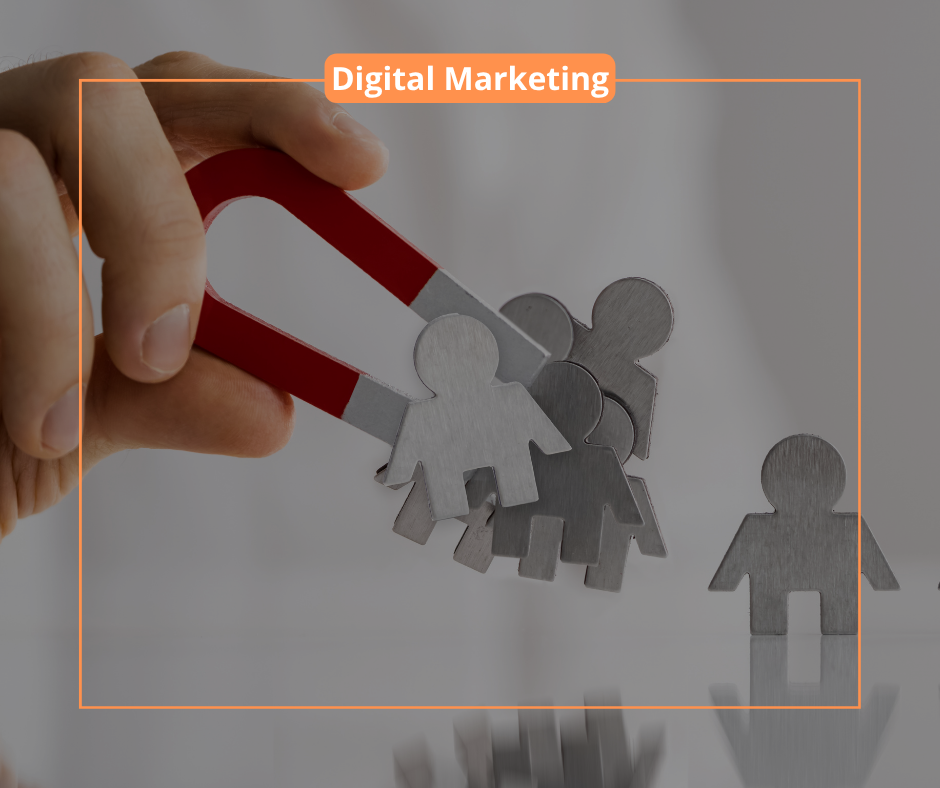
This second lead-engaging technique is done through a lead magnet , a term that evokes a visual metaphor: just as a magnet would attract pieces of metal, the lead magnet aims to attract potential leads.
Lead acquisition through Google Ads leads to the acquisition of qualified contacts as sponsored ads are shown to users already profiled based on certain characteristics that make them potentially more interested in certain products or services.
If used in the correct way, thanks also to the support of a lead generation agency, Google Ads, allows you to create increasingly effective lead acquisition campaigns and above all to optimize the budget invested.
Social Lead Generation Funnel
Another important starting point for setting up a lead generation funnel is social media. Facebook Ads tends to be more suited to B2C, but in recent years it has developed a structure capable of generating leads in B2B , directly through social media (Instagram and Facebook) and without necessarily having to invest in landing pages.
Since no one on Facebook is deliberately searching for a product like yours, unlike Google Ads, you should first ask yourself: do your buyer personas actually use Facebook ? And would your social presence be able to support your lead generation campaign in terms of image? Have you created an editorial plan to produce content that will increase the sense of trust and authenticity among your potential leads?
A lead generation agency always takes this aspect into consideration before having you invest in the advertising budget for creating social media ads.
Furthermore, it is necessary to be very careful in the creation of lead generation campaigns on social networks. In fact, unlike Google where the lead cannot preview anything except by clicking on the ad, Facebook could turn out to be a double-edged sword if careful social management is not performed.
Through Facebook Ads , your lead generation ads will be shown to users who don't follow the company but who fit into the ideal customer segment. You can target users by selecting specific parameters such as location, gender, age, occupation, relationship status, and interests , allowing you to get closer and closer to each company's typical customer.
When it comes to lead generation on social media, it must be considered that people are more enticed to take an action if they can then receive a reward. The contents promoted on social networks can therefore include:
- Prize competitions: create themed contest, which are giving away a free service or product, is a very effective strategy for making lead generation through social networks. Always remember that the prize must be in line with your brand image and at the same time it must be attractive to users who follow your social page.
- Promotional Codes: offering a promotional code for those who subscribe to your newsletter or take another action on your site is an effective way to generate leads on social networks.
- Lead magnets (which we will talk about in more detail in the following paragraph): consists of creating quality content offered free to the public in exchange for elements that may be useful to your promotion strategy, such as an e-mail address or a telephone contact.

LinkedIn and lead generation
In recent years, new lead generation strategies have also been developed on LinkedIn . This social platform presents itself as a network of professionals who interact with each other on topics primarily related to the world of work, but not only.
LinkedIn offers the ability to create personal profiles , dedicated to individuals, and company pages , dedicated to companies and businesses. These two types of users interact with each other in a single network.
LinkedIn therefore allows you to use the company page to create a clear and well-defined narrative around the services and products offered, but it also allows you to use users' personal profiles to create greater and personalized engagement.
Through the creation of detailed posts it is therefore possible to start a lead generation process similar to what happens on other social networks, but aimed at a smaller and already targeted audience.
Linkedin, in fact, allows you to obtain highly qualified leads based on the target you wish to reach.
With LinkedIn Ads, you can also create lead generation forms that stand out from simple ads and can also be delivered via message. These forms, once completed, redirect the user to a specific landing page.
LinkedIn is therefore an innovative platform to be exploited especially for B2B lead generation!
The importance of the lead magnet
As we've already mentioned, a lead magnet is a piece of quality content offered free of charge to potential customers in exchange for their contact information, such as their email address or phone number.
The aim is to get the contact into the lead generation funnel in the most natural way possible or inviting them to receive for free something that is immediately useful and immediately usable or something that recalls the brand, at any time if they need it.
In concrete terms, therefore, a specific call to action (CTA) invites users to click on a specific link that takes them to a landing page . On this page, specifically created for this purpose, users can fill out a form with data selected based on your marketing needs. Once completed, the user is directed to a " Thank you" page where they can receive the lead magnet and an email aimed at starting a conversion process that leads to user loyalty.
Among the most common and widely used lead magnets are: checklists, e-books, videos, webinars , definitive guides , and other downloadable content that is interesting to your target audience.
In the B2C sector, the most common lead magnet is the possibility of receiving a coupon or an exclusive discount , accessible only after leaving your email contact.
However, in the case of B2B services for which a paid consultation is generally required, the most commonly used lead magnet is the free quote.
The success of lead generation campaigns depends largely on how many people you can get into the funnel, so the more engaging and motivating the lead magnet is for your target audience, the easier it will be to generate leads.

Contact nurturing with email automation
Email marketing has always been a tool used in digital marketing. It's useful for companies because it's part of direct marketing, allowing them to interact and identify new business opportunities. Specifically, it's a tool that, when used correctly, increases sales, generates leads, and builds customer loyalty.
There's a specific type of email marketing called email automation , a business strategy that fits within the inbound marketing funnel . It's therefore a system whose primary goal is customer loyalty.
Contact lists acquired through lead generation advertising campaigns can be processed in a variety of ways. In the past, telephone calls were frequently used, while today, automated emails are preferred.
This process is called nurturing , which comes from the English verb "to cultivate, nourish." Contacts are nurtured with content they receive via email from time to time; each email aims to inform, intrigue, and bring the user ever closer to the bottom of the funnel, or rather, to conversion.
There are many systems that allow you to work on these contacts through email flows, among the most common email automation software we find Mailchimp , Sendinblue and Mailerlite.
Email automation basically consists in sending scheduled emails sent at pre-established time intervals. The automation flow can have an increasingly diluted duration over time, until the contact decides to take a subsequent action.
In the first phase, the user is encouraged to perform small follow-up actions that increase their awareness and consideration of the brand. Continuing in this way, the user is encouraged to perform the actual action established by the lead generation campaign : selling a product or service, contacting the customer by phone, booking an appointment, or consulting.

Who needs lead generation
In these paragraphs, we've tried to explain that lead generation actually means acquiring new customers . Given this premise, it's easy to answer the question: who needs lead generation? Simply put, all businesses have a constant need to generate new leads.
In fact, there is no single way to do lead generation, but there are different strategies that adapt to the different needs of different businesses.
For example, someone with a personal brand can drive people to a landing page to request a quote. This is a lead generation strategy.
Or, if you have an e-commerce site offering an exclusive, niche product, you can share its features with your target buyer. This is also a lead generation strategy.
Lead Generation also lends itself to network marketing and B2B activities that need to constantly expand and update their contact lists. So let's try to deepen what are the lead generation strategies to be used in these two sectors.

The acquisition of lead in network marketing
Lead Generation is a contact acquisition strategy that can prove very useful, if not essential, for network marketing businesses . In this multi-level marketing (also known as MLM) system, agents' interest is in selling their products while simultaneously involving their customers in their sales network.
Network Marketing is a sales method that has been around for a long time (to learn more, download our free guide ), but it has undoubtedly taken on a new form thanks to digitalization, which has made this sector increasingly dynamic and competitive. In the multi-level marketing system, lead generation is aimed at finding not only potential customers, but also new future collaborators who join the sales team and become agents themselves.
To find the right leads, you first need to identify your target audience by setting up lead generation funnels on social media using tools like Facebook Ads.
After defining your target audience, the next step is to create a structured and engaging editorial plan and use lead magnets, such as discounts and incentives , to acquire new telephone contacts and email addresses.
Once leads have been generated, or contacts have been acquired, targeted lead nurturing strategies can be launched to nurture relationships with newly acquired customers.
Lead Generation therefore has great potential for a sector such as Network Marketing which is constantly looking for new contacts. To achieve concrete results, lead generation cannot be improvised, but must be based on targeted strategies that leave nothing to chance.
Relying on industry professionals capable of offering quality lead generation services is definitely the best choice.
The benefits of lead generation for B2B
Lead Generation is one of the most used demand generation strategies by B2B businesses.
It's often preferable to work closely with a marketing agency specializing in lead generation to generate your own leads rather than purchasing leads through cold calling or cold emailing.
In fact, the contacts generated by lead generation are constantly exposed to useful and interesting content that "warms them up," preparing them and making them more likely to purchase our products or services or simply evaluate the sales department's proposal. In today's complex landscape, lead generation is one of the most widely used practices in the B2B world precisely because of the way people's purchasing process has changed. While potential customers once used the phone number as their first approach to speak with a salesperson, they will now search the company's website or social media channels, and if these are sufficiently convincing, they will contact the company.
The work of “cultivating” the relationship will therefore be done during lead generation, significantly supporting the work of the B2B sales departments.
In short, a good lead generation strategy allows you to have informed and positive contacts towards the company—in technical jargon, always warm.

Sales consultancy for post lead generation
Whether your business is aimed at direct sales, therefore to the end customer or to another business, you will necessarily need a sales apparatus that supports the last phase of lead generation, or conversion.
It is likely, in fact, that your potential customer wants assistance or to speak with someone before making a decision.
Contrary to what you think, the important thing for an operator of a sales department is not a thorough and detailed knowledge of the product or service. But the right attitude and a precise organization of how the sales process must take place.
Paradoxically, a trained salesperson can close contacts acquired through lead generation without knowing anything about the service.
How is it possible?
The work of post-lead generation sales consultancy is a fundamental part of the work, we have reached the end of our funnel and those who have reached this point are really interested in the product.
That's why you need to optimize results with a good sales strategy . Our agency specializes in providing sales assistance to salespeople and sales managers . If you're interested in improving your company's sales department, you can book a free call on our calendar.
Lead Generation is essential to connect customers and suppliers, if you have come to read this article, it is because our funnel has worked.








3 Comments